
Understanding the platform in which NSW Society works from
As Australia advances, creating cities of the future, we need to make careful considerations to ensure we're benefiting society. And in order to create a balance, we must focus on our two major kingdoms as building blocks. The plant kingdom and the animal kingdom, while still supporting the NSW economy.
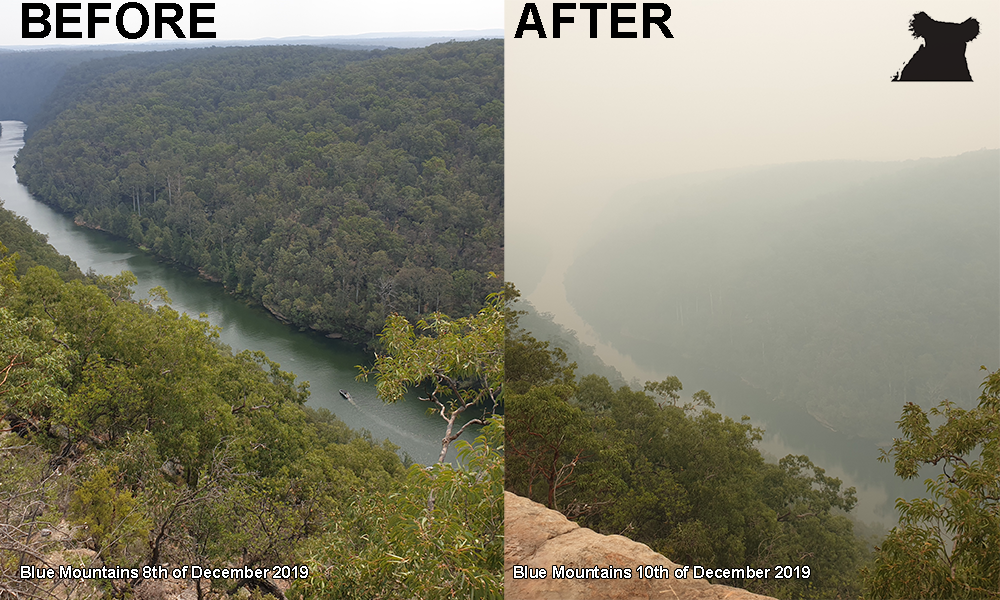
It's no secret that Sydney is currently suffering within a smoke bubble.
This issue links back to our heritage of the European settlement, where the primitive form of building found everything being constructed so close to the shore, as shipping was our main form of transport and commerce. And from those early days, commerce has continued to lead the lifestyle of Sydney and its surrounding suburbs. The constant smoke haze, is the reality of a disconnect! Where not getting it right!
Even though the outback has always been an Australian icon, it sadly remains in the background of peoples interests and minds. The beaches and the big city outshine this valuable backdrop as they bring in the tourism dollar.
Over the years we've taken the Australian bush for granted, constantly trying to control it and incrementally adding more and more pressure on it over the decades, building on top of nature's precious landscape, instead of working with and side by side.
In the beginning, the Europeans were vastly outnumbered by their natural surroundings. Fast forward 220 years to today, and the balance has shifted. We now have a need, and an obligation, to understand the impact we have here in the Sydney Basin and right across Australia.
There should be five major principles in which both society and koala professionals need to consider in a growing society such as NSW. And when it involves our wildlife, there are many intricate layers involved. These principles include:
1. A holistic approach
2. Planning with architecture in mind
3. A considered, long-term approach
4. Formulating a best behaviour programs whereby the layers of nature work with society, and
5. Behavioural changes (within society that return that investment back to the environment- and cost saving for the Governments)
Understanding the layers of our cultural mind set
You may have heard of the devastation to our koala population, brought by the recent catastrophic fires taking place all over Australia. Sadly, many did not make it. But with the help of many incredible groups, animal hospitals, and the media, there has been an influx of support for the koalas that did survive.
The footage showing Toni Doherty literally take the shirt off of her back to rescue a koala in grave danger, made headlines and turned people's attention to this dire issue. The appeal continued as Port Macquarie Koala Hospital raised almost 2 million dollars over 42,000 generous donations via GoFundMe. The campaign set a new world record raising almost 73 times its initial goal of $25,000, showing just how important the conservation of these creatures is.
Full ABC article here: https://www.abc.net.au/news/2019-11-29/koala-hospital-makes-australian-gofundme-history/11749394
A lot of Australians are culturally inclined to follow news cycles, where emotions are raised based on what is being covered. This is the case with the bushfires, floods, drought and many other natural disasters or social issues. Although they're happening regularly, some even continually, it's not until they're brought to the forefront of the media viewers' attention that they're significantly acted on.
But every year we're faced by drought. Every year there's less rainfall. Every year we're consuming more water. And every year our wildlife is suffering from these events whether it be injuries or death.
Don't get me wrong, the media highlights are wonderful in that they bring attention to the problems being faced. But what good does it do long-term if the koala hospitals are only now thinking of creating a secondary hospital, when in time there will be no koalas left? They've been endangered for quite some time now with numbers dropping drastically every year.
When and how will we break this cycle of counter-intuitiveness?
I support Port Macquarie Koala Hospital, but not their long-term vision or strategy being proposed. The fact that they're partnering up with Mid North Correctional Centre to plant six thousand eucalyptus trees is admirable, but it's also saying something else to me. It shows the staff turnover, the lack of growth in wage and the lack of maintaining the highly skilled staff, who move on from a conservative ideology. Koala food plantations have their limits and having all six thousand trees in one location is questionable. This increases the risk of placing their food supply under higher risk, when the environment is only going to get worse, and bushfires more intense.
My suggestion? Diversify the plantation sites.
I know that Port Macquarie Koala Hospitals have partnered with the Correctional Centre to save money and support the inmates – It's certainly not an easy job to maintain a koala food plantation.
The comments made by with Steve Withnall stating "Supplied of leaf are very hard to get, especially in the quantity we need" is quite frankly incorrect. I think they just don't want to pay for professionals, like our organization, to have koala food transported to their hospitals.
Management of the Koala Hospital decided about five years ago to change their supply and food practices. Traditionally, old tried and tested methodologies were used which ensured a high level of variety in the koala diet. It meant that koalas had a strong connection with the environment, so when the chemical composition of the gum leaves change throughout the year, they could maintain an intricate balance between bushland and their nourishment. But, over time, this type of knowledge had lost its appeal because of the expense to maintain it, as well as fast-changing landscape of society.
Today, Port Macquarie Koala Hospital have chosen a more controlled approach in terms of daily costs and expenses. They had three options:
- 1.Continue with the old ways of sourcing koala food and turning it into a specialist training program. From the platform of the old traditional field cutting practices where this type of behaviour leads to a number of programs to potentially to engage with the local community. For example, knocking on doors to see if they could prune local and diverse trees, or
- 2.Follow the captivity management sector by creating their first plantation site, which would eventually separate the hospital from the local community. The plantation gives them more control in terms of requiring less knowledge, saving time, and being less expensive by finding a cheaper workforce to manage the hard work.
- 3.The third is getting their koala food supplied, where we are professionals in sick and injured koalas, as we specialize in the mental enrichment of the koala, where we combine the two koala feeding methods, that's works hand in hand with a more structured program such as koala food plantation sites. But Again, they are smaller in size, spreading our risk, in different soil characteristics, which increase mental enrichment and the most important factor that connection in the environment, but the downside is the expenses such as our time, transport and our long-term approach.
The problem with option two, is that you lose out on food quality. As trees change their chemical composition, while growing in the one positions as staff are still force to source food in that location, so by only having one or two locations narrows the ability to stay in direct contact with their environment, as koala food characteristics change based on the environment in which they grow. So by diversifying the way you source koala food also helps reducing stress levels.
So, they're effectively separating the connection of these sick koalas from the fruits of their original habitat. This can be put down to a budgetary issue, where they are trying to avoid more experienced staff, energy and potential complications. Because the more experienced your staff become, the more they see a different level of workmanship, naturally asking more questions, changed interests and more projects on the horizon. They end up costing more money to keep on payroll as Staff naturally want to evolve within their work positions making changes and be challenged. Then the white collars staff of the koala hospital needs to come up with new marketing strategies, which you need a higher level of creativity costing even more money.
The biggest problem in the koala industry! It's too conservative. It relies far too heavily on consulting agencies when the real work is actually done by the labour force – this is where the funding needs to be spent. Koala's are one of the highest labour-intensive animals in Australia and around the world, so the last thing we need is more paper work.
Those working on the ground with these animals, are the ones making the real difference and advancements. But with OUR CULTURE and our governments always pushing for scientific data, the labour force becomes restricted. Then the industry loses highly well-trained foot soldiers who lack that degree from a conservative tertiary education system, as they becoming sideline and second rate, when koalas are simple to work out, when staff are place in a high level of workmanship. This type of work environment directs staff to see a different perspective of the koala, outside the academic environment, but because of our high staff turnover, as the industry relies more and more on part time volunteers, we've create a invisible box, that glass box, which prevents us from moving forward. Experience professional Foot-soldiers who believe in themselves, soon see the boundaries in which our koala industry creates for itself and figure out they can work just as hard in another industry, and be payed double for the same drama. So, the best staff leave with 5-10 or more years of experiences, leaving a huge gap of knowledge, in-between them and new staff, creating an alternate realty.
Steve was correct when he said "Variety is important, so four different types of eucalyptus trees are being planted" however four tree species is terribly inadequate. I supply leaves to a local zoo who already had 12-15 tree species in their plantation sites. Now in TODAY'S CURRENT CLIMATE, even those numbers are considered out of date. This shows the abrupt changes in our environment.
To give you a better idea of numbers, my small organization works off around 50 tree species per year, depending on the given time, weather and budget, and that's for both captive and free-range koalas. There always been a disconnected understanding for what the sick and injured koalas require, at the beginning you have too over supply their needs- to allow yourself in time to reduce and streamline their specific personalizes needs, as each koala has their unique personality and temperament, which you need to figure under pressure. This type of workmanship is a-part of a bigger plan and infrastructure, but the koala conservation sector is poorly funded, or miss directed. And Port Macquarie Hospital aren't aware of this type of practices, as its been develop over the decades in the captive sector, where we create an enrichment program, but with only two plantation sites providing four species of leaves? These just shows the disconnect between the two different sectors of the koala industry.
Yes, the Port Macquarie Animal Hospital have a world class reputation for treatment, but that work goes down the drain if they have a lack of knowledge as to how to manage dietary requirements in this pressured situation. It's not just about keeping the koalas at a healthy weight range and nutritionally well off, it's about maintaining their enrichment and the link to their and other environments and building up their confidence knowing they have been exposed to a wide group of trees! Which is part and parcel of their mental and the holistic approach.
I'm sad just like everyone else, but not for the reason you may think! When you're in this industry long enough you develop a thick skin, what I'm most disappointed in, the way my industry still and only has one option to adversities their support for their koalas. Its off the back of playing the victim- which is well founded, but that's only because of the platform in-which we work off! and the cultural way Australians see their environment and the real reality of how best to promote their course, which is sad in itself .
With our politicians constantly drumming down our throats, the number one underlining issue, is Jobs! Which creates a direct conflict with the Australian bush, but then again our Prime Minster and his party were elected from this type of platform, well instead of fighting them, join them, lets set-up, our own platform that works with our major federal and state politicians, if this is what the majority of the people want, then the pressure is back on us, to work with the majority. Its not always about "working harder", but "working smarter".
The koala industry could give more than one option of interest, because its very depressing now, when the koala industry FEELS it has only one-time frame of the year, for maximum exposure with the media, which is off the back of one of Australian culturally driven platform, such as the EVENTS of BUSH-FIRES.
The koalas are always a part of the mixed of emotions, Connected them with the BUSH-FIRES, possibly to reduce the anger of residents away from authorities, deflecting emotions away from asking the bigger questions- like why are we still under the same platform year after year.
Koala could easy contribute towards society in so many different other ways, other than consistently being a victim to our growing insecurities. The mere fact, this behaviour cycle has been happening since the 1920's (In 1929 the stopping of the fur-trade), is saying something within the koala industry itself!
And when the captivity sector were on a winner back in the 80's in the south-east of Queensland, again the culture mentality here in Australia and in Queensland return, as it was the only break in Australian history, where the koala were seen as a hero, and the average person for the first time in Australian, seen the koala in a different light, and started to create a stronger platform, turning volunteers into pay professionals, to have this opportunity to get up close and hold a koala for a photo, was unbelievable and ground breaking, but we fell back to our usual strong hold of our many insecurities, and the captive industry were promoted as selling out! But because we had no strong vision of what the future, the conservationist at that time, worked on their campaign- leave koalas in the bush, (well that's now under threat). So, today the captivity industry itself were forced to slow down, and to the point where we are today! WITH DIFFERENT STATES having different legislation's, creates different standards, with different mind-set and experiences. Our own koala industry is at the bottom, when compare to other industries, which only makes it EVEN harder to move up the rankings, as there no-one trying to market the koala from a different perspective! And break the behavioural and cultural cycle we are currently in.
The fact that we still rely heavy on donation for support, with no real changes in 90 years, is saying something!
The koala industry also has limits, and it's the reason why we find ourselves, always asking for handouts, that plus butting heads with our own and different government agencies, who don't know who to believe, in terms what's best for the koala and society in general, as they too want creativity and SCIENTIFIC Data, but with a balance approach from us, but we have too many D__k heads in our industry, SAD!, by true, for some sitting behind desk al- day, do more harm than good! Especially when the koala is one of the most popular animals on this planet, figure that one out?
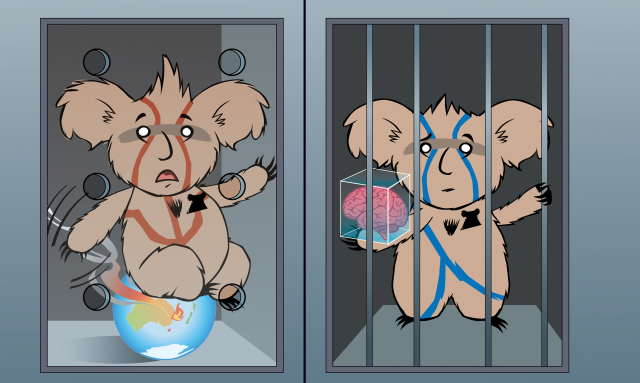
The fear we have with Koalas, is really the fear we have within ourselves and as a society
Koalas Habitat is disconnected because society is disconnected.
The money raised for the Port Macquarie Koala Hospital was a wonderful success, although the order of events is back to front. Unfortunately, the money was only given after the damage had already been done, rather than funding for prevention work. It's hard to ask society to act on things before a bad event happens, and that's just a part of our culture. But it's time to break this behavioural pattern and focus on a larger vision, not just the short term.
It's like RFS, (Rural Fire Service) where they have their back-burning in Autumn and Winter - everything needs to be carefully planned and put into place before setting up a similar form of work, where you combine koala captive practices, for wild and free-ranger koalas, that are under threat. Setting up a task force of removal koalas under threat, placing them a short-term captive environment before they are return, while continuing our studies and researching in and out of captivity.
This type of practices, maybe the new normal, where koalas are place in and out of captive environment for maybe the next 50 years or so, until we as a society gets a grip, on water storage, carbon emissions, and Governments focus on the environment.
We all need to know the importance of our plant and animal wildlife, to the point they should dominate our surrounding and challenge our housing industry, NOT TO SLOW DOWN but to reinvent itself, just like it was implemented, after the Cyclone Trace back in Darwin in 1970's.
Koala conservation should be part of a bigger operation of the NSW circular economy.
And with Australia building more and more cities, there needs to be a platform in which society works, rest and leisure in support of our environment, I rather we were out of balance just the way of the first European settlement had been, for a better and safer future.
Our next Article: 46 Architecture
52 articles 4 themes 1 story www.koalaretreat.com


